
Guides
How to Pose for Full-Body Photos (Standing, at Home or Outside)
September 6, 2026 · 7 min read · By the ShePoses team
The direct answer: put the camera around waist-to-chest height, step back until your head and feet are in the frame with a little air above and below, turn your body about 45 degrees, and put your weight on the back foot with the front knee soft. Full-body photos look stiff when the lens is at eye level, looking down, or when both legs are locked.
This is a different problem from selfies. A close-up pose cannot be copied onto a standing photo — the framing has to match. If you already have a standing reference you like, you can transfer that pose instead of restaging it.
Why full-body feels harder than a selfie
In a selfie the camera is close and the mistakes are on your face. In a full-body shot the mistakes are everywhere: locked knees, arms glued to your sides, cropped feet, and a lens that is too high, which shortens your legs.
Leave headroom and foot room. Cropping through the ankles is the fastest way to make a standing photo look accidental. If you are too close to fill the frame, you are too close — step back, do not tilt the phone down.
The best camera height
Hold or prop the phone at waist to lower-chest height, aimed slightly upward or level — not from above your head, and not from the floor. Eye-level standing shots flatten the body. A slight low angle lengthens the legs without turning into a worm’s-eye gimmick.
At home, a stack of books on a table plus the rear-camera timer is enough. Outside, a friend at your waist height beating a burst while you walk will beat any self-timer you hold at arm’s length.
4 standing poses that do not look planted
These four cover almost every full-body photo people actually post.
- The stand — weight on the back foot, front knee soft, torso 45 degrees, one hand in a pocket or on a hip.
- The lean — shoulder or hip against a wall, doorframe, railing, or kitchen counter. The surface does half the posing.
- The walk — mid-stride toward or across the camera. Keep the arms moving; freeze only in the review, not in the shot.
- The sit — on steps, a bench, or the floor with legs angled, not both knees pointing at the lens.
What works on every body
The flattering geometry is the same whether you are petite, tall, or plus-size: create space between your arms and your torso, shift weight so one hip drops, and turn so the camera sees a narrower line. A hand on the natural waist (not mashed into the stomach) makes that space on purpose.
Do not square your shoulders to the lens and lock both elbows. That is the “I am waiting for the photo to be over” stance, and it photographs wider and stiffer on every frame.
Match standing references to standing photos
A waist-up selfie pose will not give you a real full-body result — not in the mirror, and not with AI. Save standing references (feet visible, single person, clothes on) and photograph yourself the same way.
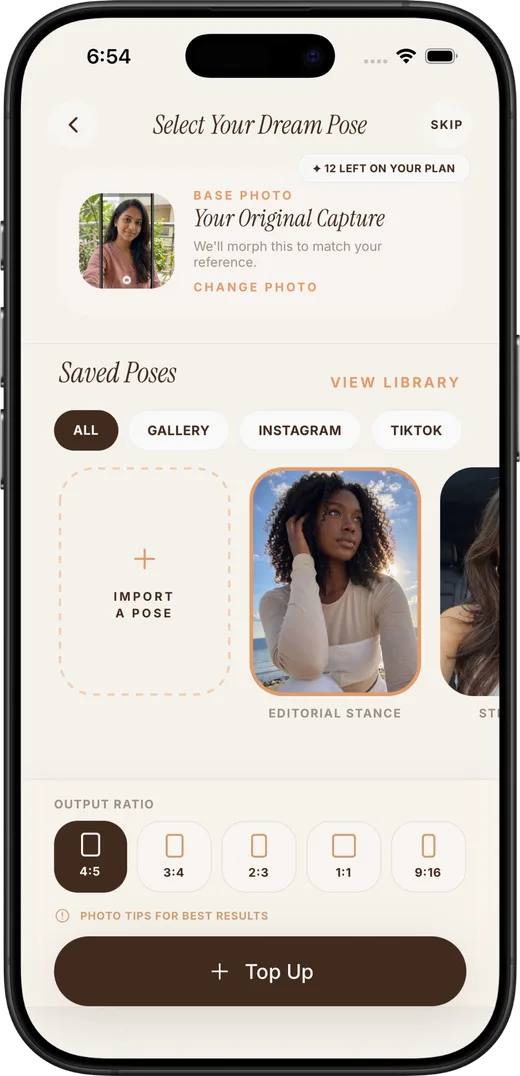
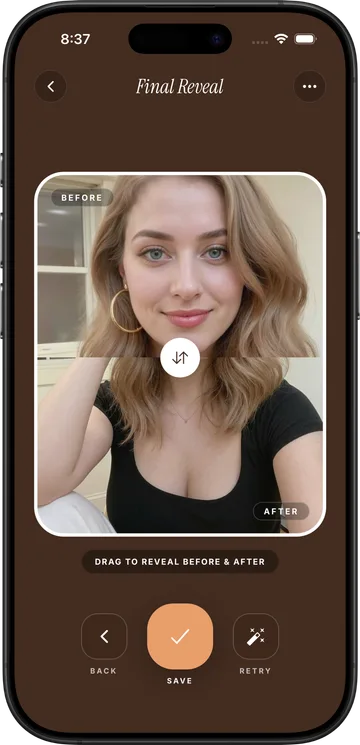
ShePoses transfers a standing pose onto your standing photo in about 30 seconds and keeps your outfit and background. If you only have close-up selfies, take one honest full-body first — then pick a standing reference.
Skip the practice — transfer the pose
ShePoses applies any saved pose to your own photo with AI. Your face, outfit, and background stay yours — only the pose changes.
Download on the App StoreCommon questions
What is the best camera angle for taking full-body photos?
Waist to lower-chest height, far enough back that your head and feet are in the frame with a little space above and below. Avoid shooting down from eye level — that shortens the legs. A slight low angle is enough; the floor is too low.
How do I stop looking stiff when I stand for a photo?
Put weight on the back foot, soften the front knee, turn 45 degrees, and give your hands a job. Stiffness is two locked legs and arms hanging. One lean or one step in a burst usually fixes it.
Can I use a selfie pose for a full-body photo?
No. Framing has to match. A close-up reference has no information about legs, feet, or weight shift. Use a standing reference for a standing photo — and a selfie reference for a selfie.
How do I look taller in a full-body photo?
Lower the camera to waist height, step back instead of cropping your feet, shift weight to the back foot so the front leg lengthens, and stand away from the background so you do not blend into a wall. That is geometry, not a height filter.
